Table Of Content
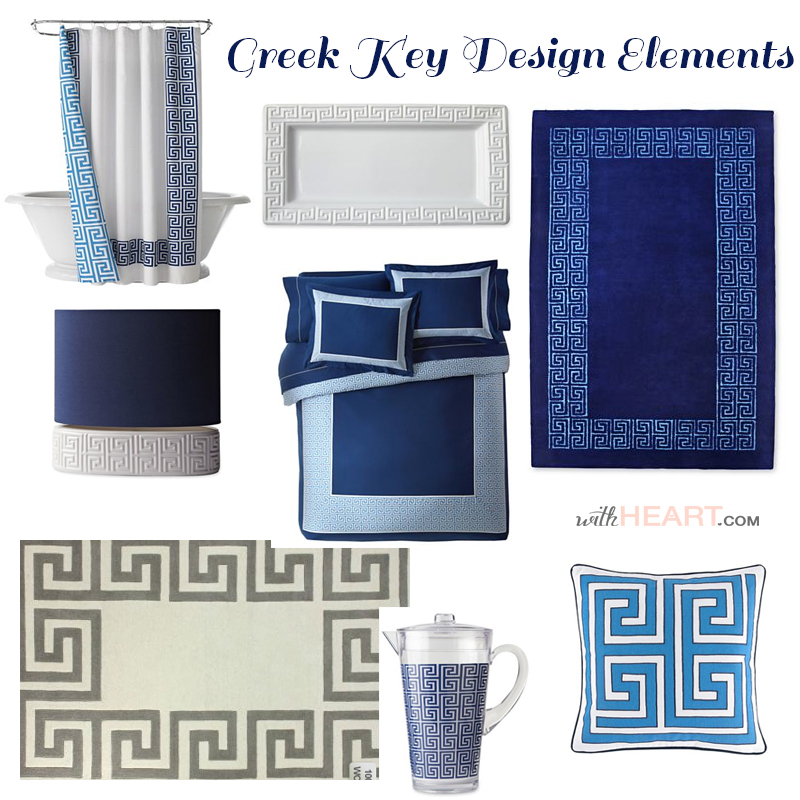
It has stood the test of time and continues to be a popular design choice in modern times because of its meaning and beauty. At its most fundamental, the pattern, also known as the meander motif, is made up of a long, unbroken line that repeatedly folds back on itself. It’s said to mimic the ancient Meander River of Asia Minor, notable for its many twists and turns. (It’s the same 250-mile river known as the Menderes that flows through Turkey today.) The motif was believed to symbolize infinity, or the eternal flow of life. Among many other things, it was used as a decorative border on Greek pottery, mosaic tiles, and temples. The Greek Key pattern is one of the most recognizable motifs in ancient Greek art and architecture.
How did this ancient design go mainstream?
Fast forward to the eighteenth century, by which time the motif had made its way into the design vocabulary of most of Europe. It was an ornamental favorite during the French Empire and English Regency periods. And in the nineteenth century, archaeological digs in Greece, Rome, Egypt, and Pompeii turned up Greek key-inspired styles in furniture and art on both sides of the pond.
This pattern keeps popping up in design, and it’s even older than it sounds
The mantel is attributed to the London carver and frame maker William Adair, who, with his brother John (died 1771), provided architectural details for both Stuart and Robert Adam. The complex Greek meander is not illustrated in either The Antiquities of Athens or Adam’s Works in Architecture. Nevertheless, the meander was a standard motif in the 18th-century architectural repertoire.
Crossing Time and Space with the Meander
The design comprises multiple lines arranged in a recurring pattern that bears a resemblance to a key. The most common shape used in the Greek Key is the square, which is repeated to create the continuous line. However, there are versions, including rectangles, triangles, and diamonds. This pattern became particularly important to the classical Greeks and then Romans. A handy, exhaustive resource on Greek key border patterns, including a handy online Greek key border pattern generator to create dozens of variations. In this blog post, we will delve into the geometry and symmetry of the symbol, its connection to the meander pattern, and its varied interpretations in different cultures.
Far-right victories in Greece highlight trend across Europe - NBC News
Far-right victories in Greece highlight trend across Europe.
Posted: Tue, 27 Jun 2023 07:00:00 GMT [source]
The meander symbol can also be traced back to many early civilizations, including Mayan, Etruscan, Egyptian, Byzantine, and ancient Chinese. It was a favorite decorative motif during and after the 4th dynasty in Egypt, decorating the temples and tombs. Archaeologists have also discovered it on Mayan carvings and ancient Chinese sculptures. The meander has an undeniable power to elevate any outfit with its boldness and touch of sophistication. This timeless pattern effortlessly adds a sense of elegance to watches, jewelry, and handbags.
Decorative uses
We can carve into hard substances, or we can weave it into fabric using a variety of techniques. Greek Heritage Society of Southern California (GHS) was established in 1985 to preserve the rich culture, heritage and traditions of Greek immigrants in Southern California. Frank Lloyd Wright’s connection to Arizona, the location of his personal winter home Taliesin West, runs deep, with his architectural influence seen all over the Valley.
Artist Kesh Plans to Sue Versace for Plagiarizing Her Designs - Fashionista
Artist Kesh Plans to Sue Versace for Plagiarizing Her Designs.
Posted: Tue, 31 Mar 2015 07:00:00 GMT [source]
The Greek Key pattern has stood the test of time and continues to captivate with its timeless elegance and cultural significance. From ancient Greece to modern design, this iconic pattern has left its mark on the world of art and decor. I’m pretty sure that these are the most time-consuming drapery panels I’ve ever made. That border certainly isn’t a quick and easy detail (not that it’s difficult, but it’s certainly not quick, especially with all of that topstitching), so I’m still not finished with my living room draperies.
However, the symbol went beyond its practical significance and held a metaphysical meaning; it also embodied the heroic and resilient spirit that epitomized the Greeks. Its modern meaning refers to a purposeless wandering – a directionless journey, devoid of any goal. It embodies the concept of meandering, where the focus is on enjoying the journey rather than reaching a specific destination. I made the following video to show you the full step-by-step process of creating that Greek key design with twill tape or ribbon. Then I placed painters tape just inside the first border of twill tape to give me an even spacer between the two stripes of twill tape.
A Symbol Of Eternity And Continuity
Understanding its significance is important for anyone who appreciates the beauty of the greek key symbol. In china, the symbol represents the flow of energy through the universe, while in native american cultures, it signifies the border between life and death. Though it is referred to as a Greek Key, this distinct meander pattern is found in decorative designs worldwide. Artists and artisans outside of Greece were using it long before the Ancient Greeks. Many early civilizations around the world, who weren’t communicating with each other, used similar patterns. The Greeks, however, really embraced it and started using it everywhere.
Greeks used it as a decorative element in pottery, jewelry, and architecture. The Greek Key, also known as the meander or fret pattern, consists of a continuous line that twists and turns, creating an interlocking geometric motif. Its origins can be traced back to ancient Greek architecture, where it adorned the friezes, borders, and pottery of prominent structures. The Greek Key pattern is a classic decorative element that originated in ancient Greece. The geometric continuous form of the Greek Key design works well on trims and edging.
I hope it might encourage the application of this timeless, visually engaging detail as an ornamental accent for contemporary classical architecture. The Greek key or meander was one of the most important symbols in ancient Greece, representing infinity or the eternal flow of things. In modern times, it remains a common theme, replicated in fashion, jewelry, decorative arts, interior design, and architecture. This ancient geometric pattern transcends time, and will continue to be a source of inspiration for decades to come. Greek key, also referred to as meander, is in its most basic form a linear pattern.


No comments:
Post a Comment