Table Of Content
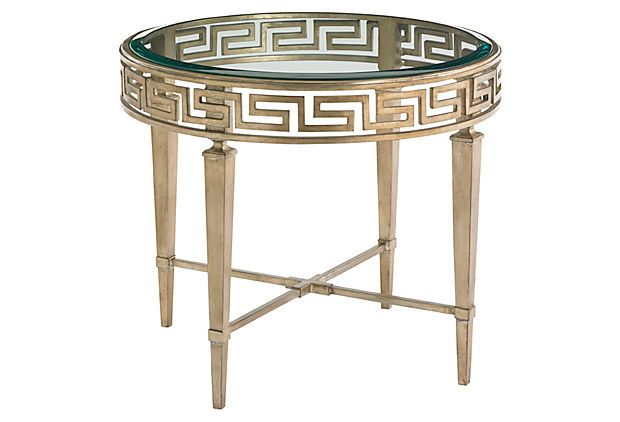
Although we call it the Greek Key, the symbol pre-dates the Hellenistic period, as it was used abundantly in decorative arts back in Paleolithic and Neolithic periods. In fact, the oldest found examples are ornaments from Mezin (Ukraine) that date back to about 23,000 B.C. The pattern adds sophistication to a modern space or a touch of classic elegance to a traditional space. It was very popular in the Empire and Regency periods of the early 19th century.
But Why the Key Pattern?
Its symbolism and meaning, representing infinity and the eternal flow of life, make it a powerful and meaningful design element. Its symmetrical and rhythmic design creates a sense of harmony and balance. In modern design, the Greek Key pattern continues to captivate with its timeless elegance and versatility. Its symmetrical and rhythmic design creates a sense of harmony and balance, making it a popular choice for decorators and fashion enthusiasts. And with the twill tape design completely ironed on, I then used my sewing machine to topstitch the twill tape all the way around the panel. I sewed both edges of the tape as close to the edge as possible, and it gave it a very nice finished look.
Preserving Greek Culture & Heritage
Understanding the contemporary meaning of the greek key symbol is essential, as it has become a design feature in modern fashion, art, and architecture. From the friezes on the parthenon to the decorative borders on ancient greek pottery, the symbol was used to add a touch of sophistication and elegance to buildings and structures. The greek key symbol has been an integral part of architectural design since ancient times. From its origins in ancient greece to its evolution over time, the greek key symbol has played an important role in various aspects of human history and culture.
Meander (art)
I also find that it’s harder to make mistakes or accidentally overlook a measurement (like getting in a hurry and accidentally allowing only four inches for a bottom hem rather than a double four-inch fold). If all of the folds are in place and ironed in, then you can be pretty sure that the placement of the twill tape is just right. I’m giving you those links because I’m not going to repeat the basic steps for making a lined drapery panel in this post. But I think it’s helpful to be familiar with the basic steps so that you can understand how the basic process changes when you want to attach a trim around the edge of the panel. Yes, the greek key symbol can have different meanings depending on the context of its use.
Understanding The Contemporary Meaning Of The Greek Key Symbol
One way to incorporate the Greek Key into your modern design is to use it as a border design. The repetitive nature of the pattern creates an aesthetic, harmonious flow. It captivates the gaze along the edges and highlights the architectural features.
In ancient Greece they appear in many architectural friezes, and in bands on the pottery of ancient Greece from the Geometric period onward. The design is common to the present-day in classicizing architecture, and is adopted frequently as a decorative motif for borders for many modern printed materials. The greek key symbol has a rich history and holds significance in various cultures around the world.
Meander Symbol in Jewelry and Fashion

One of the greatest benefits of Greek key is that it adds architectural interest to a room where there isn’t any. Edge simple curtains with a Greek key trim, and it’s as though you’ve magically added architectural moldings to your windows. Put down a large-scale Greek key rug, and you instantly have a strong, geometric shape that anchors the room and optically makes it look bigger. But it’s the Greeks who used the motif with abandon, hence the reason we most commonly refer to it as the Greek key. The Romans then copied it, and by the 18th century, all of Europe had adapted it into their design vocabulary. For our own history, the motif has been celebrated in many design periods, including Empire and Hollywood Regency.
The greek key symbol is a versatile and enduring motif that has stood the test of time. Its geometric design has made it a popular choice across a range of industries, from architecture to fashion and design. Today, the greek key motif continues to be used in architecture, with the design featuring prominently in interior design elements and home decor.
In Ancient Greece, the unbroken, interlocking pattern of the Meander (Meandros), or Greek Key, was one of the most important symbols; it symbolized infinity, unity and the eternal flow of life through reproduction. Many fashion labels have also been inspired by Greek culture and mythology. In fact, Gianni Versace chose the head of Medusa for his label’s logo, encircled with meander patterns. It’s no surprise that the symbol can also be spotted on his collections, including dresses, t-shirts, jackets, sportswear, swimwear, and even accessories like handbags, scarves, belts, and sunglasses. Another palette comprises orange and black, particularly seen on ancient Greek pottery.
Ancient Greece-Inspired Decor Is a Top Trend for 2022: Here's How to Copy the Classic Style - Yahoo Finance
Ancient Greece-Inspired Decor Is a Top Trend for 2022: Here's How to Copy the Classic Style.
Posted: Mon, 25 Apr 2022 07:00:00 GMT [source]
On a rug, this motif anchors a room, and on pillows, it brings sophistication. Some of the cultures that embraced the fret pattern felt it mimicked a snake. Others thought it depicted lightning, or said it symbolized infinity and unity (because the line folds in on itself so perfectly). Mammoths roamed the earth, specifically the earth in the Mezin area of Ukraine. There, in 20,000 BCE, on wide ivory bracelets made of mammoth tusk (which look like chic cuffs even today), there were carved designs of this fret pattern. In this article, we will explore the history of the Greek Key pattern and share tips on how to match it with your design.
According to “Psychology Today”; a media organization and magazine, featuring a wide variety of psychologists, anthropologists, sociologists and science journalists, recent finds show the Greek Key was not only a decorative pattern. In its simplest form, the Greek key is a band of short horizontal and vertical lines, connected at right angles and at its most intricate it can form labyrinths and interlocking key patterns. More than likely we’ve all come across the ‘Greek key’, also known as the ‘meander’ (a repeating geometric motif), at some time or another. She holds a Masters degree in Linguistics and Education, and has also studied Political Science, Ancient History and Literature.
In the 1500s, it moves from artists in Greece to nearby artists in Rome. Romans incorporate the pattern in marble altars, frescoes, paintings, temples (including a Raphael painting in the Vatican). It grows in popularity via Roman architecture, all the way through the 1700s. The design is so deeply entrenched in China’s history that even now, more than two thousand years later, you can go to an old-school Chinese restaurant in the U.S. and see the same design snaking its way around a ceramic Chinese plate. Crossing to yet another continent, we find the fret pattern next in China at around the same time. Here, it is called Rolling Thunder as the lines are said to represent clouds (and are a good omen for crops because clouds bring needed rain).


No comments:
Post a Comment